
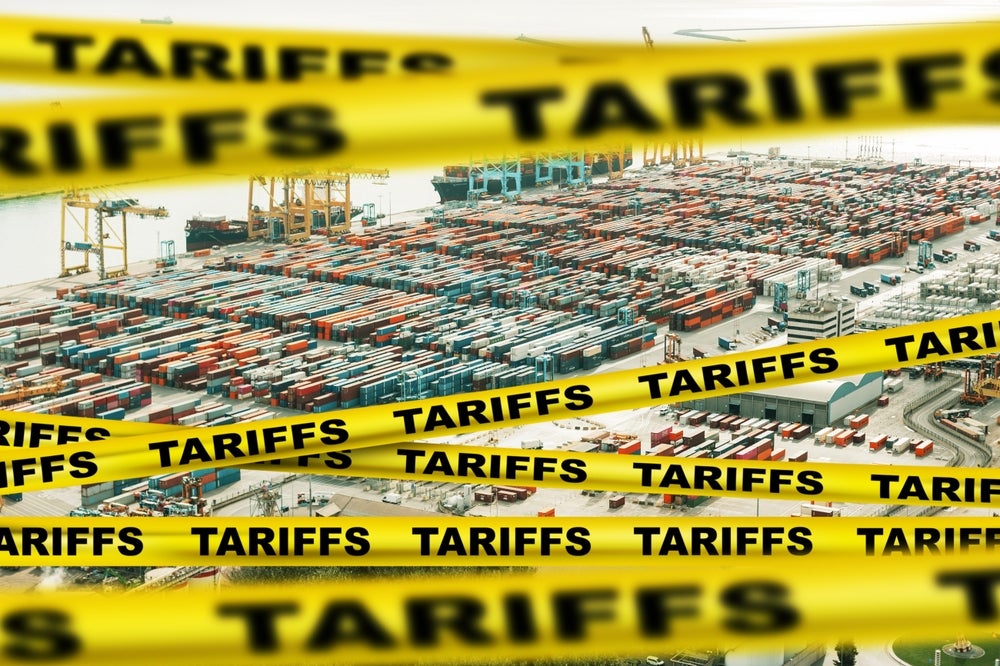
The UK government has signalled that it is open to slashing import tariffs on American-made cars and parts as part of efforts to secure a broader trade agreement with the United States.
According to reports from the Wall Street Journal, a draft proposal has been circulating that would see the UK cut tariffs on US car imports from 10% to 2.5% — a move that would bring them in line with the current rate the US applies to imports from some other countries.
Go deeper with GlobalData


Access deeper industry intelligence
Experience unmatched clarity with a single platform that combines unique data, AI, and human expertise.
The plan appears to be gaining traction in Whitehall ahead of trade negotiations in Washington this week, where Chancellor Rachel Reeves is leading talks with US Treasury Secretary Scott Bessent. Reeves is visiting the US capital for the spring meetings of the International Monetary Fund, using the occasion to advance discussions on a new bilateral trade framework.
According to Bloomberg, Reeves will press for an agreement that protects key British exports, particularly cars and pharmaceuticals, from the 25% tariffs recently proposed by the Trump administration. These two categories make up around £15 billion of the UK’s annual exports to the US, and UK officials are increasingly concerned about the impact of rising trade barriers.
Reeves, in prepared remarks before departing for Washington, warned that the UK economy could be significantly affected by the new tariffs: “I am in no doubt that the imposition of tariffs will have a profound impact on the global economy and the economy at home.”
The IMF has echoed those concerns, warning that the UK stands to be disproportionately affected by the ongoing US trade policy shift and has cut its UK growth forecast accordingly.
While Reeves declined to confirm any specific tariff figures, she did not deny the contents of the Wall Street Journal report. Asked whether the UK would reduce its car tariffs to 2.5% as part of a reciprocal arrangement, she said she would not give a “running commentary” on the details but did not rule it out.
Trade analysts suggest such a reduction could be structured to comply with World Trade Organization rules if it forms part of a broader agreement. David Henig, a trade expert, told the Financial Times that although WTO rules require free trade deals to cover most trade, the principle is rarely enforced and the move could be legally defensible.
American car exports to the UK are relatively modest, worth about $1.4 billion annually, largely because many US brands sell EU-assembled models in the UK market. In contrast, British car exports to the US, particularly luxury models from Bentley, Aston Martin and Jaguar Land Rover, are far more substantial.
Bentley Motors is based in Crewe, England, and has operated as a subsidiary of Germany’s Volkswagen Group since 1998. Jaguar Land Rover (JLR) has been owned by India’s Tata Motors since 2008. Aston Martin Lagonda Global Holdings PLC, headquartered in Gaydon, Warwickshire, remains an independent British manufacturer.
These brands have been directly affected by the 25% levy, which Mike Hawes, chief executive of the Society of Motor Manufacturers and Traders, described as having a “severe, significant and immediate” impact.
Reeves said she recognised the pressure UK exporters are under but insisted that the government would not compromise on safety or quality standards in any trade deal. “We are not going to be changing our standards based on asks from foreign governments,” she said, adding that decisions on auto standards, digital rules and food safety would remain within the UK’s remit.