
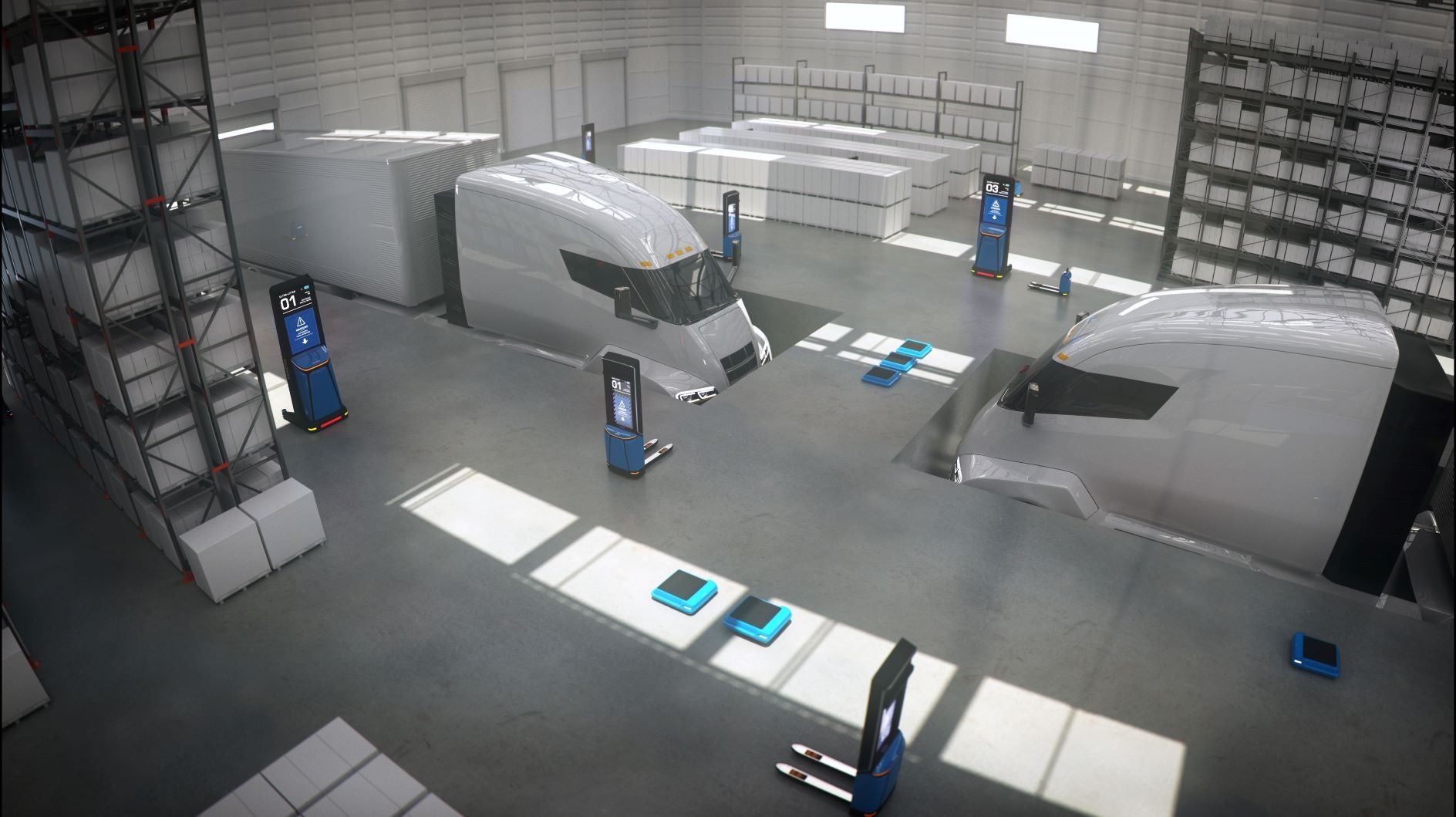
Toyota Material Handling Europe (TMHE) will be collaborating with Microsoft at Hannover Messe from 1 and 5 April to present their vision of accelerating digital transformation in logistics.
The first preview of TMHE’s future logistics vision at the Microsoft booth was presented in 2018, with the concept of ‘A.I. TeamLogistics’ for connected vehicles with on-board intelligence. The Pallet drone vehicle was equipped with Azure Cognitive Services, using Microsoft HoloLens to visualise scenarios.
Go deeper with GlobalData


Access deeper industry intelligence
Experience unmatched clarity with a single platform that combines unique data, AI, and human expertise.
Azure Machine Learning (trained by reinforcement) allows the vehicle to understand its route based on its moving surroundings, whereas HoloLens allows human beings to interact with the autonomous vehicle.
From scanner and vision sensing technologies and human programming to machine learning, the vehicles will allegedly adapt to minor deviances such as obstacles encountered or objects being out of place.
TMHE and Microsoft further warrant their vision to provide optimism of performance, efficiency and safety within their operations over time.
The vision was originally planned to take effect in 2028, but has now been pushed forward to 2020.
US Tariffs are shifting - will you react or anticipate?
Don’t let policy changes catch you off guard. Stay proactive with real-time data and expert analysis.
By GlobalDataBoris Ahnberg, core technology developer at Toyota Material Handling Europe, said: “By being able to capture and represent the customer environment and providing the next generation of intelligent trucks, Toyota Material Handling Europe allows customers to improve performance in their warehouse, not only in terms of machine utilisation rate and goods throughput.”
Çağlayan Arkan, global lead, manufacturing & resources industry at Microsoft, said: “By simulating different scenarios virtually and using Azure machine learning and artificial intelligence, the deployment time is dramatically reduced, the deployed vehicles dynamically adapt to their environment, and a deeper insight into the customer operations can be offered.”