What began as a small Portuguese software venture has become an international force in financial technology. VTXRM combines engineering rigour, client collaboration, and a winning mentality honed in the stands of Estádio da Luz, now powering financial systems from Lisbon to Chengdu, China.
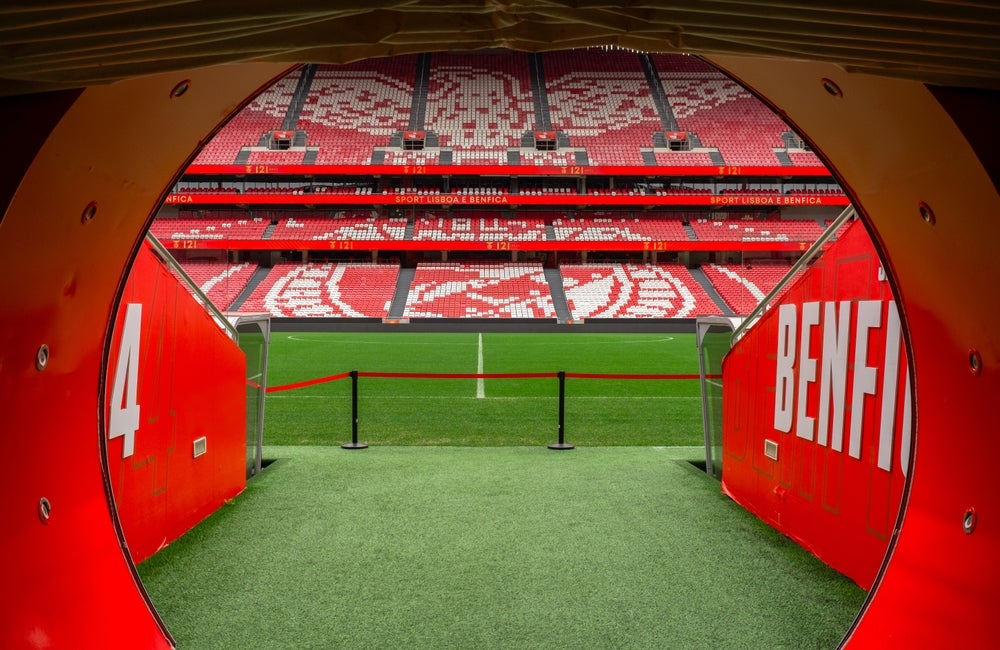
Nuno Silva and Eduardo Braz are both Benfiquistas, supporters of Benfica, their local Lisbon football team that has won numerous Primeira Liga titles, as well as two European cups.
Go deeper with GlobalData


Access deeper industry intelligence
Experience unmatched clarity with a single platform that combines unique data, AI, and human expertise.
That success is matched by their company VTXRM, which prides itself on “empowering financial companies for excellence,” the mantra that has seen it rapidly evolve into a profitable specialist in innovative finance solutions.
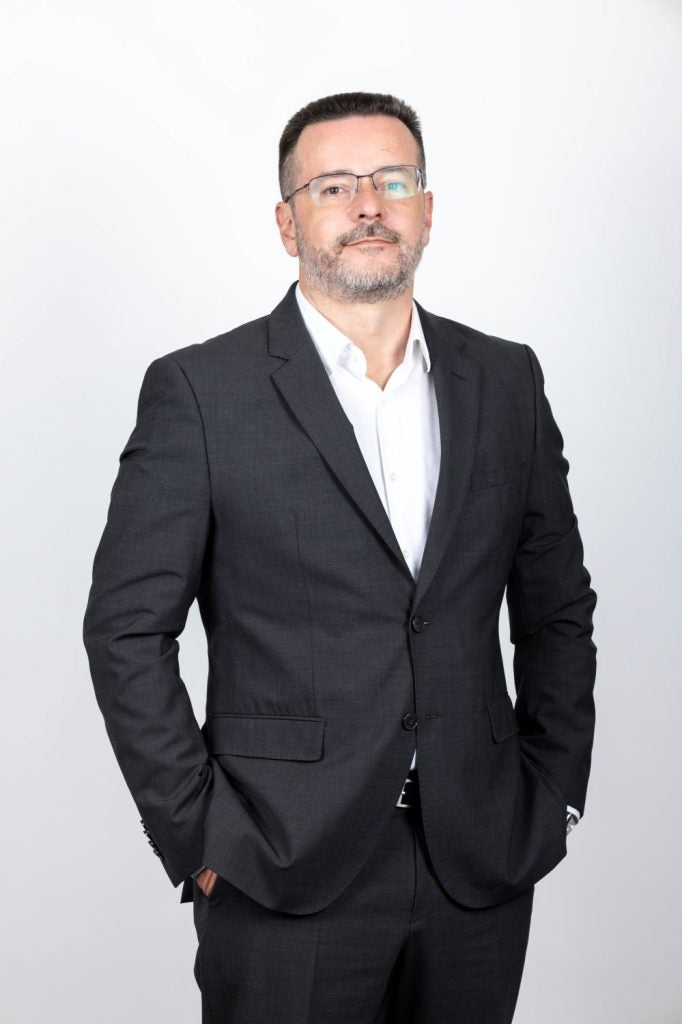
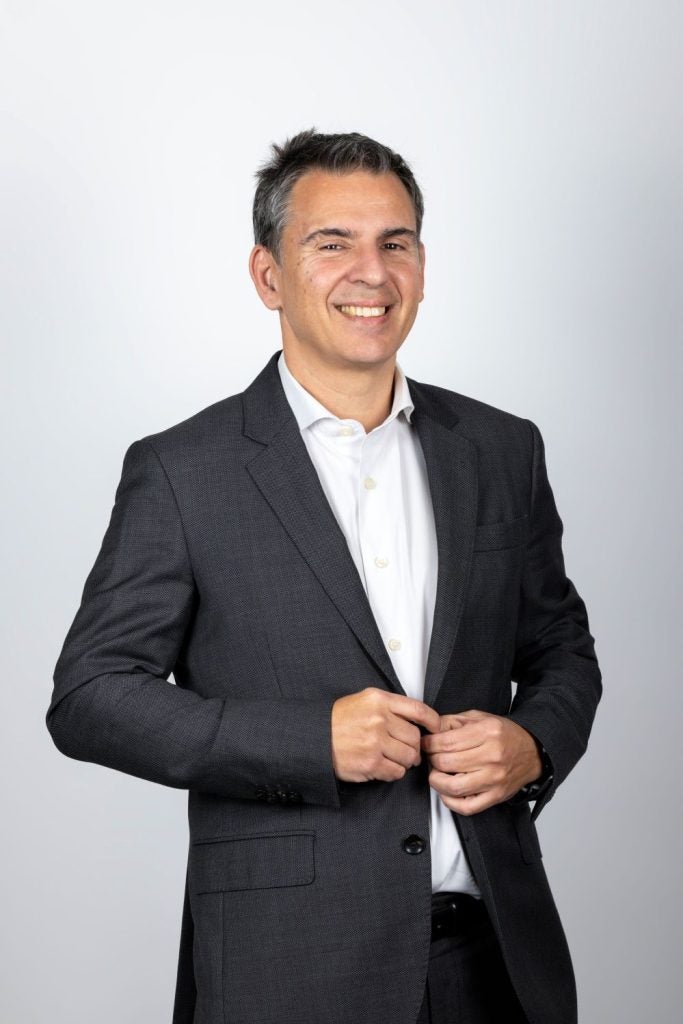
Silva, the chief executive officer (CEO), started working in the industry 26 years ago in a company that developed software for financial companies, and Braz, the chief sales officer (CSO), more than 30 years ago in a software house with a unique leasing solution for the Portuguese market. He was operating in development at the time and has a background in computer engineering.
Both Silva and Braz, with other colleagues, started a company called Vantyx, developing their software from scratch. Silva became CEO after passing through all areas of the company as head of development and head of projects, until eventually taking on the role 10 years ago. The company name has changed. Its derivation is complex, but at least it gets them talked about.
“We had the experience in the area to build from scratch newer technologies, and at the time our company numbered around 20 people,” he explains.
Now it boasts some 450 employees and has followed quite a journey, notably with the involvement of Volkswagen Financial Services (VWFS).
VTXRM started working with VWFS around 12 years ago, with it eventually taking over the VTXRM software to conduct all of its business. But VTXRM remained a separate market company, with its own clients, including Caixa Geral de Depósitos (CGD), the Portuguese State Bank.
The successful arrangement with VWFS gave VTXRM an opportunity to embark on a project with Volkswagen in Russia, leading to a more centralised cooperation with the VWFS headquarters, establishing framework agreements and becoming the flagship software for its international application strategy for contract management systems.
VTXRM was working with Volkswagen in Portugal, in Russia, and also in China, and it had a very strong opportunity to become its supplier, as part of a Request for Proposal, by becoming shortlisted with a very successful proof of concept for VWFS in Germany.
As Silva explains: “It was at that time that I was called to the board of Volkswagen Financial Services, when they told me we really like you, but you are becoming too important for us. We want to have a bit of a grip on the company. They had an interest in entering the capital of the company by taking over the part held by my partner at that time. Their condition was that I would remain as CEO.”
“My condition was that we had a joint venture agreement. That VTXRM was not a department of Volkswagen Financial Services but would continue to be a market company. So we all agreed on the principles and VWFS took on the capital.”
VTXRM has a holding company called Soft Bridge that owns 90% of the capital. The other 10% is spread among some of the management. When VWFS entered the scene it purchased the 60% belonging to Silva’s partner and he retained 40%. Some years later Silva sold 10% of his stake to VWFS, so now it owns 70% of the 90% that Soft Bridge owned.
“The relationship is really good,” enthuses Silva. He describes it as an “arm’s length agreement”, with VWFS not privy to any detailed information about VTXRM, which remains a market company.
“We have a board that is composed of three people, me, the CIO of VWFS, and another person nominated by VWFS, where we discuss the budget for the next year, but no sensitive content, which is really good for us.
“And VTXRM is a very healthy, profitable company. It distributes dividends every year to its shareholders, with no loans or any type of support, while acting independently. “We decide our own strategies, our own technologies, and our own markets to approach,“ Silva adds.
The Accipiens product
The company had an internal contest to decide on the name for its key product, with the head of sales at the time suggesting Accipiens, a Latin word that means receiving, or accepting, which they tied to the act of borrowing money.
Accipiens is a contract management system that covers the entire life cycle for specialised credit products, such as leasing, loans, and factoring, managing everything from the initial application to the process of litigation.
A company can use the software to manage all of their business areas. It is also cloud-enabled, with AI functionalities incorporated. It can integrate with existing systems in a seamless way, supporting all the regulatory aspects of different countries together.
It has multi-country, multi-currency, and multi-language functionality, Silva and Braz are keen to point out.
“We believe that we have one of the richest types of software on the map. Our functional coverage beats basically everybody,” notes Braz.
Silva and Braz are also keen to instil another important facet, not only in the software, but in the mindset of the company, there is flexibility. Their clients say they are able to adapt during a project. One of the biggest compliments they receive from their clients is the capacity to listen to them, to understand their needs, to be flexible.
Accipiens is a highly configurable product that enables a lot of customisation specific for each client. This helps VTXRM support business needs.
The company also tends to make large investments in the product every 3-4 years to advance it technologically and is on the verge of completing the latest edition, adding new functional elements that have been driven by the company, or upon client request.
Besides adopting the latest technologies in terms of cloud modernisation, and functionalities within the system, they have use-cases that really bring value to clients – modular with a common core. The company has also engaged in “physical modulization,” dividing-up some of the main modules – underwriting, contract activation, contract operations, treasury, accounting, collections, litigation, and credit analysis – in order to make it more scalable, more exportable, and able to evolve at different speeds.
The clients that have taken an initial look at these changes and are already providing very positive feedback, Silva and Braz enthuse.
The company’s markets
The product market in Portugal is rather small, and mature, with most of VTXRM’s clients having been there for many years, some from the beginning. It is still growing too. Equipment and vehicle leasing was up by 5% (year-on-year) to €1.145 billion in H1 2025, bolstered by the auto and industrial sectors, according to the Portuguese Association of Leasing.
The company is also present in several other countries in Europe – Spain, Germany, France, Greece, the UK and the Netherlands. There are no restrictions on its expansion across Europe, north or south, with the main targets being Germany, Austria, Switzerland, Spain, and notably with Volkswagen in Germany, and BMW in France.
VTXRM plans to leverage its experience and know-how to achieve growth in these markets, working with local and global partners too, including Deloitte, Accenture and KPMG, not only in Europe, but also China, other parts of Asia, and the US.
“Until around four years ago, we were always going directly to our clients, doing our own implementations. And because we already had more than we could chew, we had good references in several markets that we did not have the capacity to approach ourselves,” Braz explains.
“We decided to change the company strategy in terms of direct implementations to a hybrid model where for some clients we do everything. So we sell the software, sell the project, do the implementation, but in a hybrid model where we are also working with partners. Since then, we have been preparing the company to be able to work with partners.
In July 2025, the company opened an office in Chengdu, China’s Sichuan province, where it has its biggest client, forming a partnership and working to engage with other partners with local and broad reach to participate in the implementation of the product, and in future support the clients.
“It is very clear that our future will be together with entities that want to support our business model and that want to work with us around the world.
This includes technology partners. “We are also working with IBM and Microsoft, not only for the cloud support, but also the AI components of the solution.”
And Silva is confident in the way the company is heading, with positive financials to report.
“Last year, we closed the year with around €30 million of income, and EBITDA of around €10 million, so it’s a very healthy company.
“We have been growing by around 25% a year for the past three or four years, both in terms of income and headcount. We are able to support ourselves, and generate liquidity by ourselves, with big investments in our product.
Just like Benfica’s recent unbeaten run, it seems that VTXRM is going from strength to strength.